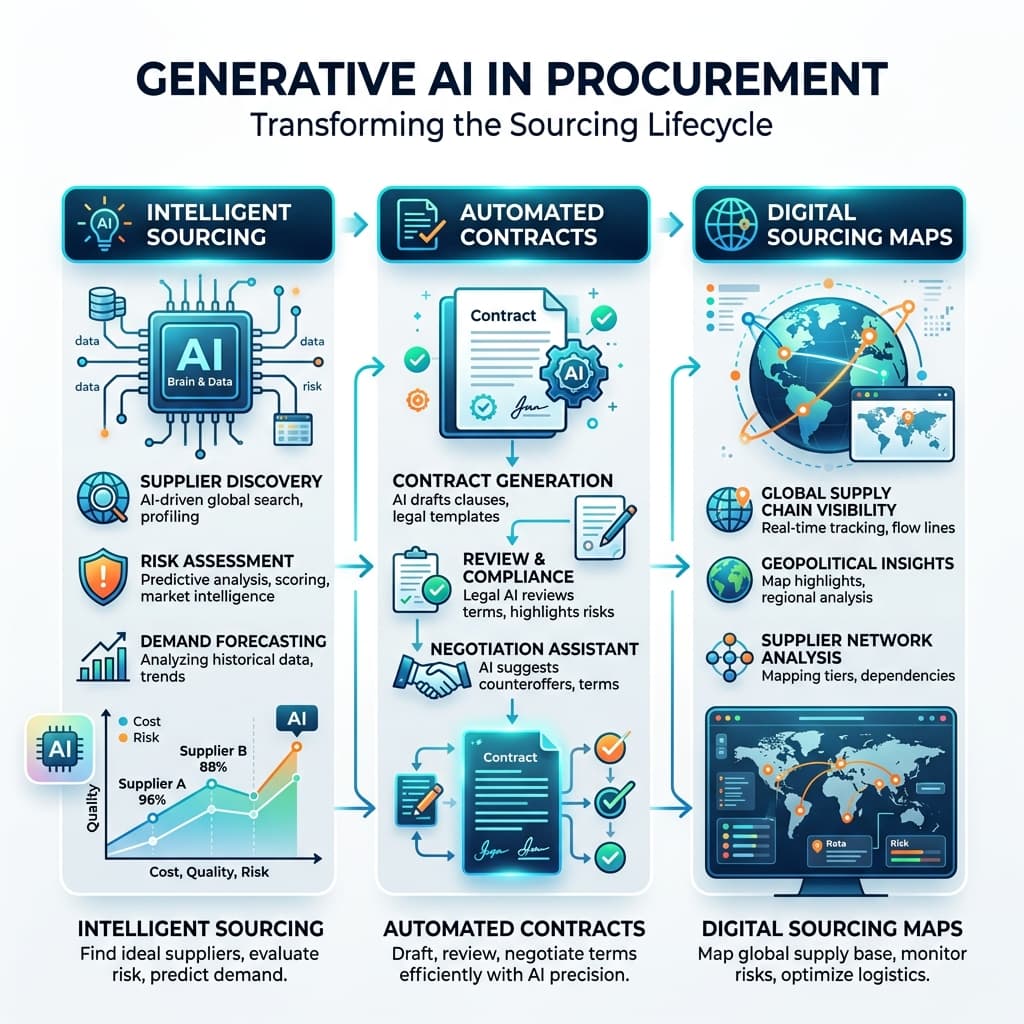
Generative AI is no longer just for creative writing or code snippets. In the high-stakes world of enterprise procurement, it is becoming the primary engine for intelligent sourcing. Instead of teams spending hundreds of hours manually drafting Requests for Quotation (RFQs) or Statements of Work (SOWs) using outdated Word templates, Generative AI allows for the dynamic creation of context-aware sourcing documents that are optimized for clarity, compliance, and competition.
The End of the "Copy-Paste" Era in Sourcing
Most procurement professionals admit that traditional sourcing involves a lot of copying and pasting from previous events. This often leads to "Template Drift"—where old, irrelevant clauses find their way into new requirements, confusing suppliers and slowing down the process. Generative AI systems, like Wheelson BizAI, analyze the specific requirement, the category, and historical performance data to draft a unique RFQ from scratch. The agent understands the technical specs needed for a new SaaS implementation versus a facilities maintenance contract and adjusts the legal and commercial terms accordingly.
Contract Intelligence and Clause Optimization
A contract is only as good as the logic it contains. Generative AI doesn’t just read a contract; it evaluates the risk. By training on thousands of enterprise agreements, our agents can draft clauses that protect your interests while being fair enough to prevent endless "Red-Line" cycles with supplier legal teams. The agent can summarize a 50-page Master Services Agreement (MSA) into a 1-page executive summary, flagging high-risk indemnity clauses or missing service level agreements (SLAs) instantly. This is "Legal-Aware Procurement" that accelerates the Time to Signature (TTS) by up to 60%.
Hyper-Personalized Vendor Engagement
Generative AI also transforms how you interact with your supplier base. Agents can draft personalized outreach messages that explain the specific value of a sourcing event to a vendor, increasing your "Response Rate" from high-tier suppliers. Furthermore, as bids come in, Generative AI agents can normalize the data—translating different supplier formats into a single, structured comparison table—while providing a narrative summary of why one bid might be technically superior even if the price is higher. This enables a more nuanced, data-driven award decision.
Strategic Governance and Continuous Improvement
Every sourcing event managed by an AI agent becomes "Training Data" for the next one. The system learns which SOW structures led to the best outcomes and which clauses caused the most friction. Over time, your procurement function builds a self-improving sourcing engine. Governance is also built-in: every draft generated by the AI must pass through a human-in-the-loop "strategic review" step, ensuring that the AI’s creativity is always anchored by your organization's specific policy and ethical standards.